Crate Versus Play Kennel: Why Where Your Dog Waits During a Groom Matters
The time between steps is part of the groom, and for many dogs it's the hardest part.
October 21, 2026 · 4 min read
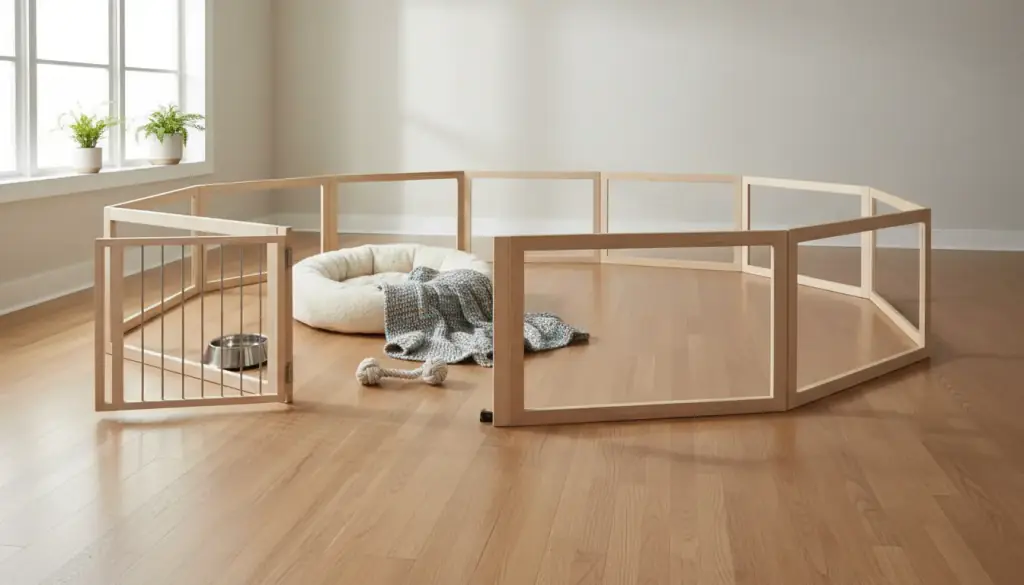
When people picture a grooming appointment, they picture the bath, the brush, the trim. What they usually don't picture is the waiting. Yet in many shops, a dog spends a big share of the day parked in a small cage while somebody else's dog is being worked on. For some dogs, that's no problem. For others, it's the most stressful stretch of the visit.
What a tiny crate does to a worried dog
A crate can feel like a den to a dog who has been trained to love one at home. A strange crate in a strange place, surrounded by other dogs, is a different thing. A dog who can't stand up and turn around comfortably has nowhere to put their nerves. Pacing is out. Stretching is out. All that's left is to sit with the noise and wait.
Dogs in that position often show it. They pant, whine, scratch at the door, or go very still and stare. Energetic dogs get frustrated and wound up. Older dogs can get stiff and sore from holding one position. Rescue dogs, some of whom have spent long stretches in kennels before finding a home, can find confinement truly upsetting. Their history is something a groomer can't see, and a small cage can bring it right back.
There's a practical side, too. A dog who has spent an hour or two working themselves up in a cage arrives at the grooming table already wired. They're harder to settle, harder to handle, and more likely to have a rough time. The waiting set the tone for everything after it.
Why space changes how a dog feels
Room to move is a basic comfort. A dog with space can stretch out, lie down in a way that suits their body, shift when they get restless, or curl up when they get tired. They can choose. Even a small amount of choice helps lower stress, because feeling trapped is a big part of what makes dogs anxious.
A roomier kennel also helps the dogs who aren't anxious at all, only energetic. A young dog with energy to spare does better when there's space to stand, turn, and settle, instead of bouncing off the walls of a box. Settling is easier when the body has somewhere to go.
Questions to ask any groomer about waiting
You don't need to be an expert to check this out. A few plain questions will tell you a lot about how your dog will spend the day.
- Where will my dog wait between steps, and how big is that space?
- How many other dogs will be in the room, and will mine be able to see or hear them?
- How long will my dog be there in total, and how often will someone check on them?
- What happens if my dog gets upset while waiting?
- Can I tell you about my dog's history with confinement before we start?
A good groomer won't be bothered by these. They'll be glad to hear them. The answers also tell you whether the shop is built around the dog's comfort or around fitting in as many appointments as possible.
Waiting at home versus waiting at the groomer
If your dog is crate trained at home and loves it, tell the groomer. That's useful information, and some dogs genuinely do like a cozy enclosed space. If your dog has never been crated, or only ever tolerated it, say that too. What matters is matching the setup to the dog, not following one rule for every animal.
You can also help by working on calm time apart from you. Short stretches in another room, a chew toy, a mat to settle on. Dogs who've practiced being comfortable alone have an easier time when they're away from their people during a groom.
How Paws and Relax handles it
At Paws and Relax Pet Spa, there are no tiny crates. Each dog gets a spacious play kennel where they can fully relax and get cozy between steps. That fits the rest of how Briana Smith works: one dog at a time, soft lighting, soothing music, and as few distractions as she can manage. The idea is that the quiet parts of the visit should be as calm as the hands-on parts.
It's a small detail, and it's easy to overlook when you're comparing groomers by what they do with scissors. But for an anxious dog, an older dog with stiff joints, or an energetic dog who needs a place to settle, where they wait can matter as much as what happens on the table.
Watch how your dog comes home
Your dog's behavior after a visit will tell you plenty. A dog who comes home relaxed, tired in a normal way, and willing to eat and drink probably had a decent day. A dog who is frantic, clingy, or shut down for hours probably didn't. If you see the second pattern repeatedly, look closely at the setup, including the waiting arrangement, and consider asking your vet if anything physical could be contributing.
If you'd like to see whether a quieter setup suits your dog, Paws and Relax is at 1348 Pleasant Valley Road in Gallant, Alabama, and takes appointments Monday through Sunday from 7:30 am to 7:00 pm. Call (256) 305-3387 or send a note through the contact page, and tell Briana about your dog's habits before you book.
Paws and Relax Pet Spa, (256) 305-3387
Call (256) 305-3387More articles
Signs Your Dog Is Stressed at the Groomer, and What a Low-Stress Groom Looks Like
Dogs rarely say "I'm scared" loudly, so owners need to know the small signals that come first.
Getting an Anxious or Rescue Dog Ready for Their First Grooming Appointment
A little preparation at home, and a few honest words with the groomer, can change how the first visit feels.